
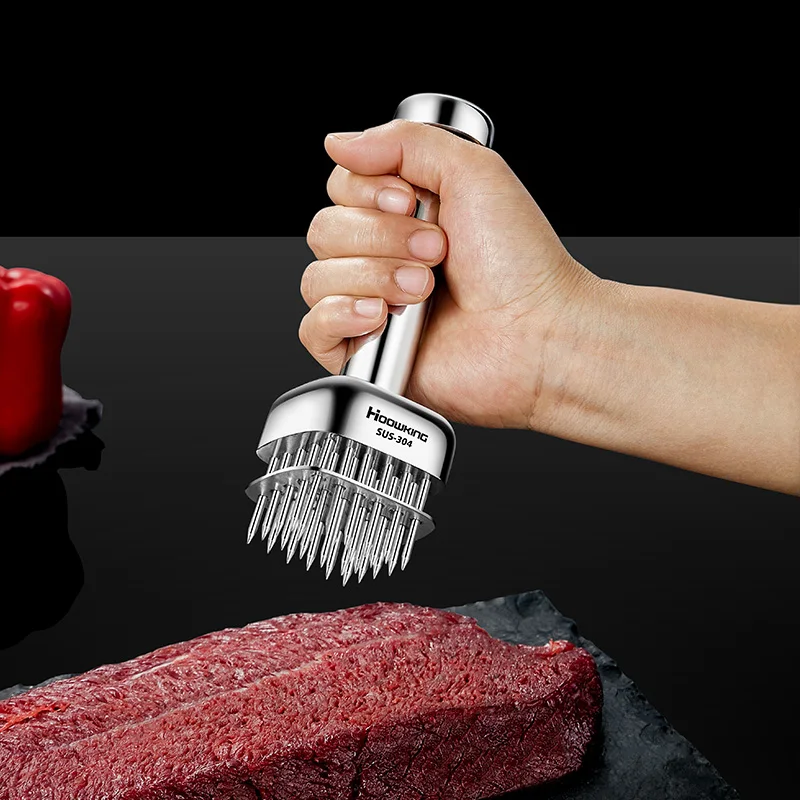
304 Stainless steel meat hammer needle steak tender needle pork chop loose meat needle hammer stainless steel hole piercer
4.981+ sold
$28.59
0% OFFBuy on AliExpress
You will be redirected to AliExpress to complete your purchase
Specifications
- Brand Name
- HOOWKING
- Origin
- Mainland China
- Meat & Poultry Tools Type
- Meat Tenderizers & Pounders
- High-concerned chemical
- None
- Material
- Metal
- Metal Type
- Stainless steel
- Feature
- Eco-Friendly, Stocked
- Model Number
- F-593
- Type
- Meat & Poultry Tools
- Choice
- yes
- semi_Choice
- yes
Product Description
Pros & Cons
Pros
- 304 stainless steel for superior rust resistance and hygiene
- Eco-friendly and stocked for quick availability
- Effective needle design tenderizes meat faster than pounding
- Versatile for steaks, pork chops, and ground meat
Cons
- May require force, not ideal for very soft meats
- Handheld design lacks non-slip grip details
- No model-specific weight info, could feel heavy
- Mainland China origin might mean variable finish quality
Common Questions
What material is the meat hammer needle tenderizer made from?
Made from 304 stainless steel, which is rust-resistant and food-safe.
What sizes or dimensions does the steak tender needle hammer come in?
Compact handheld size ideal for home use; exact dimensions not specified but ergonomic for pounding steaks and chops.
Is this meat tenderizer compatible with various meats like pork and beef?
Yes, suitable for steak, pork chops, and loose meat; stainless steel needles pierce tough fibers effectively.
How do you use the stainless steel hole piercer for tenderizing?
Press firmly onto meat surface and hammer down to insert needles, breaking down fibers for quicker cooking and tenderness.
What shipping options are available for this stocked meat tenderizer?
Stocked item from Mainland China; fast dispatch, 7-15 days international with protective packaging.
Product information last updated on March 30, 2026